Monday, March 3, 2014

Louis XIV RAFT C

Dear King Louis XIV,

I am immensely blessed to have been welcomed into your beloved Versailles. I am one of the only peasants to have been granted a tour of Versailles. When I first walked in, I was flabbergasted at the sight of the finest paintings and statues, glittering chandeliers and mirrors displayed in the halls and salons. I couldn't believe that it used to be a royal hunting lodge. As we were guided to the royal gardens, I was blown away by the millions of flowers, plants, trees, and fountains that were set out in precise geometric patterns. Although I was astounded by the beauty of Versailles, I couldn't help but think that the money wasted on this palace could have been used more wisely on more important issues for the better of France. While you are having elaborate ceremonies to emphasize your own importance, your people are dying of hunger. There is no food left, there are barely any citizens left because of the depopulation, there are no jobs and everyone is getting laid off, and the economy is desperately struggling. Instead of crushing Frances economy, you should be helping it and strengthening it. I just believe that there are better places where the money and focus of France should be directed to.

Please don't kill me,
French Peasant

Sunday, March 2, 2014

A Day in the Life...

London, 27 March 1667

This blog post represents how I might have spent a day in the life as a common folk in 17th century London.

Today, on my way to work, I stepped in animal feces twice and tumbled over the carcass of a dead dog once. My water carrier is late today and I think that I have a disease just from washing myself. The water tasted even more foul than it usually does today.

Dinner is at midday today and it is going to be delicious. I didn't even have breakfast today so I am very hungry. We are having fish and meat and sweet pies for dinner today with sweet meats and fruit for dessert and weak beer for our drinks.

Today I am wearing a wig and a three-piece suit. My wig had nits and lice in it when I first got it but then I cleaned it. My eyebrows are unfashionable so I replace them with little bits of mouse skin. Also, I really smell bad today.

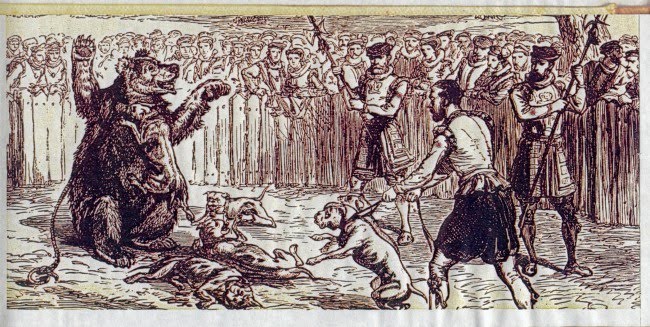
Today I went to see a nice execution. Since I was in that type of mood, after that, I went to go see a bear-baiting on the south bank. Next I went to this new thing called a coffee-house just to see what it was and try it out. It was pretty good. Then, I enjoyed a nice walk in the royal parks and while I was near there, I took a boat ride up the river. Lastly, I went to another new thing that was opened called a theatre and watched an actress for the first time. Today was just an average day.


Picard, Lisa. "Sex, Lice, and Chamber Pots in Pepys' London." 17 February 2011. British Broadcasting Company. http://tinyurl.com/LondonDayintheLife

"Bear-Baiting." Shakespeare's England. http://www.shakespearesengland.co.uk/2009/11/17/drunken-cocks-bear-baiting/

Tuesday, January 14, 2014

Dumbfound Discovery in D.C.


Over the summer, my family and I went to Washington D.C.. We went to countless amounts of museums and saw extraordinary things like the Wright Brothers first plane and the gun that killed President Lincoln.


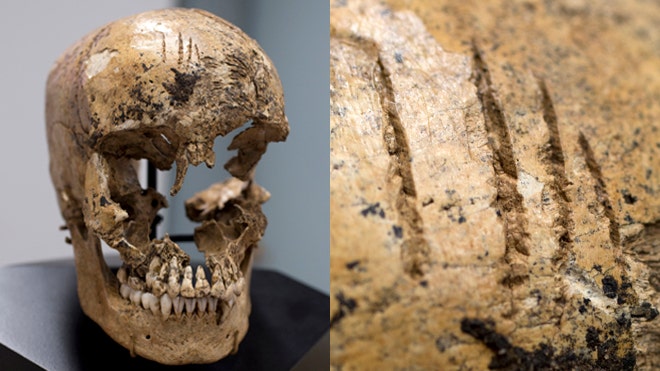
While I was in the Smithsonian's National Museum of Natural History, I was going through an exhibit that featured many things from the earliest settlements of the new world called "Written in Bone: Forensic Files of the 17th Century Chesapeake". When I first entered the exhibit, I looked over to my right and was blown away by the scene of the mold of a skull that appeared to be carved or dug into with a sharp object.


http://www.foxnews.com/science/2013/05/01/scientists-find-evidence-cannibalism-at-jamestown/


I walked over to the display. Next to the skull in the glass was a wax mold of a young ladies head and shoulders. She looked young and was in a position where you could see everything about her.


I looked over to the poster that was next to the display. It said in large letters "Jane of Jamestown." I thought to myself; Jamestown, I remember vaguely learning about that in fifth grade. Underneath the title described what was in the display and what scientists had discovered happened to her and many others during "the starving times" of Jamestown.


Many of the settlers from Jamestown were starving to death and had become very desperate so they resulted to the last possible solution that they could think of; cannibalism. They would dig up dead bodies that they had buried and they would eat them.


In history class this year we learned about early Jamestown and we were asked a very complex question. That question was "Why did so many colonists die during early Jamestown?"


This connects to that question and what we learned about in class because this proves that one of the answers to that question was because of starvation. The starvation was so bad during this time that the settlers had to refer to eating their deceased.


I think that the discovery of cannibalism at Jamestown was a very significant discovery and will open up many doors in both the historic world and the scientific world. It will open up many doors because people will maybe think of cannibalism as a possible answer to some of their questions for other problems. Also, because many scientists can use this type of technology to help figure out many more historic mysteries.

The Truth Behind the Pligrims

Recently, I have read two chapters from the book "Mayflower: A Story of Courage, Community, and War" by Nathaniel Philbrick. The two chapters' names are "The Heart of Winter" and "In a Dark and Dismal Swamp." The two chapters that I read began about how the Pilgrims first settled. It also talked about the Pilgrims' first Winter and how bad life was during that time. Then it started talking about the Pilgrims' first relations with the Native Americans. Lastly, it talked about the Pilgrims and the Native Americans finally making peace and what they did to help each other.


http://www.fertilizer101.org/food/?storyid=4


I thought that the story behind the Pilgrims was very interesting and that the amount of facts worked in to this book was outstanding. This book was very clear and was very educational. The key topics in this book were the Pilgrims arriving in Plymouth, the staggering death rates, and the Pilgrims' relations with the Natives.

I liked this book better than any textbook or lecture but I still did not feel as though this book was put into the style of a story that you follow along with. Overall I enjoyed the amount of facts that were placed into this book and I thought that each one was important. Personally, I only enjoy books that have plots or plot twists in them. I didn't have any emotions while reading this and I like to be exited while reading a story which I did not feel while reading this book. I still felt that this book was just a little bit better than a textbook.

I would recommend this book to people who enjoy learning about history and do not care about a plot but just want to read something that is more enjoyable and easier to read than a big, fat history textbook.

I think that this book would have been better if there was a main character and the story was told from either a Pilgrims view or a Native Americans view, or even both, while still conveying the truth and having important and well-placed facts in it. I would rate this book 3 stars just because it was better than a textbook but not by a landslide.

Tuesday, December 10, 2013

Economic Activities of the Thirteen British Colonies


My map shows many things but focuses in on the British settlements of the east coast of the United States. My map was created to show the thirteen British colonies and their major economic activities. My map includes the thirteen colonies and their founding date labeled, major bodies of water labeled, the major economic activities of the colonies labeled, a title, a key, and compass rose. We also created a  carefully-crafted overview paragraph that captures the most important observations and inferences that the map provides about colonization in North America.

Displaying photo.JPG


Overview Paragraph
 
 
My group made a map which depicts the 13 colonies, their founding dates, and their primary economic exports. One thing depicted on the map is that general farming occurs in all thirteen colonies, which is important in understanding that there were no supermarkets where people can simply buy their food, people needed to make their own food. One obvious but important to understand fact is that most shipbuilding and ship supplies production happened along the coasts. Since transportation was expensive and difficult, products were made where they would be used. Another interesting tidbit is that production occurred very heavily in the northern colonies like Massachusetts and Connecticut, which is explained by the fact that they were established earlier than southern colonies like Georgia and the Carolinas. Something odd to understand is why tobacco is produced heavily, centering around the Carolinas and Virginia. This may be because there is a large bay here in Massachusettes, and because tobacco was so popular, it needed to be exported to other countries. These are only a few things which are detailed on our map.

Thursday, December 5, 2013

Free the Forgotten

Modern day slavery is an awful thing that goes on in modern day life. Modern day slavery is the act in which someone is forced without choice to do a job or task with no pay in return. My PSA educates the audience about the horrible event going on nowadays know as modern day slavery. It describes the different types of modern day slavery and what they mean. We know that you can make a difference in the world that we know today. You can stop freedom. Please help free the slaves.

Click on the link below to see our PSA.

http://youtu.be/KPPP1YXw1z0

We are not the only ones who care and made a Public Service Announcement, check out many more PSAs to gain more knowledge about modern day slavery at:

http://endingmoderndayslaveryatrmhs.wikispaces.com/FBlockPSAs

Friday, November 22, 2013

Response to The Slave Ship


The title of my excerpt is Name Unknown. The personal story being told is that there was a slave and his name was unknown. He and his family came from a village called Saltpan, on the Gold Coast. He was originally a trader, probably of slaves. He was on the slave ship Brooks in the late 1783 or early 1784 with his entire family that consisted of his wife, two daughters, and mother. They were all accused of witchcraft. While he was on the slave ship, he tried to kill himself by ripping open his throat with his own fingernails. He survived this incident but died about a week after. He convinced the doctor on the ship, that slavery is wrong.

There is resistance or turmoil in this story. There is resistance or turmoil in this story when the slave, whose name is unknown, rip open his throat with his own fingernails instead of going with white men. The slave also showed resistance or turmoil when he killed himself by refusing to eat and starving himself, again to protest going with white men. This slave goes to extremes to stand up for what he believes in and to get out of slavery.

I learned many things about slavery, slave ships, and the slave trade from this personal story. One thing that I learned about slavery is how the slaves feel. I learned that most of the slaves would rather kill themselves than be slaves. One thing that I learned about slave ships is how unclean and filthy it must have been. I learned that on the ships there were dead bodies of some of the slaves and of those dead bodies, some of them still had blood on them from those slaves who killed themselves. Also, I learned that the slave ships were very packed and there was not a lot of room. One thing that I learned about the slave trade is how quickly someone can become a slave. I learned that people can be selling slaves one minute, and then the next minute they can be sold as a slave themselves.

Plans of Slave Decks, Slave Ship Brookes

Images of African Slavery and the Slave Trade

africanhistory.about.com

http://africanhistory.about.com/od/slaveryimages/ig/Slavery-Images-Gallery/SlaveShipBrookes.htm